South Australia LED high bay upgrade
LED high bay lights in SA: 400W high bays and floodlights replaced for $33 a site
Before you buy LED high bays, check this. Eligible South Australian businesses can have old 400W high bays and floodlights replaced by an accredited installer under the Retailer Energy Productivity Scheme (REPS). The $33 is one co-payment for the whole site, not per light.
Takes about a minute · No obligation · Final cost confirmed in writing
Independent service · Not a government website · Accredited providers only · Licensed installation · Written price before any work · No obligation
Savings and cost tool
See your savings and how much the upgrade will cost your business
Tap the lights that look like yours and add how many you have. Your saving and your cost update as you go.
A regular electrician can’t apply this rebate
Only accredited installers can do upgrades under South Australia’s energy savings scheme (REPS). Work out your saving below and we put you in contact with one who covers your area.
Find your accredited installer
Tell us about your site and we put you in contact with an accredited installer who covers your area, in Adelaide and across South Australia. If you used the tool above, your numbers go with the enquiry. It takes about a minute, and there is no cost or obligation.
Form not loading? Open the assessment form in a new tab.
What happens next: we review your lighting details, confirm whether the site appears eligible, and contact you about a provider assessment. Nothing is installed and no commitment is made without a written quote showing the discount and any amount you pay.
No cost, no obligation. Details are handled under our privacy policy. Your details go to one accredited provider for your state, as set out in our privacy policy.
A real $33 upgrade: an Adelaide warehouse, before and after
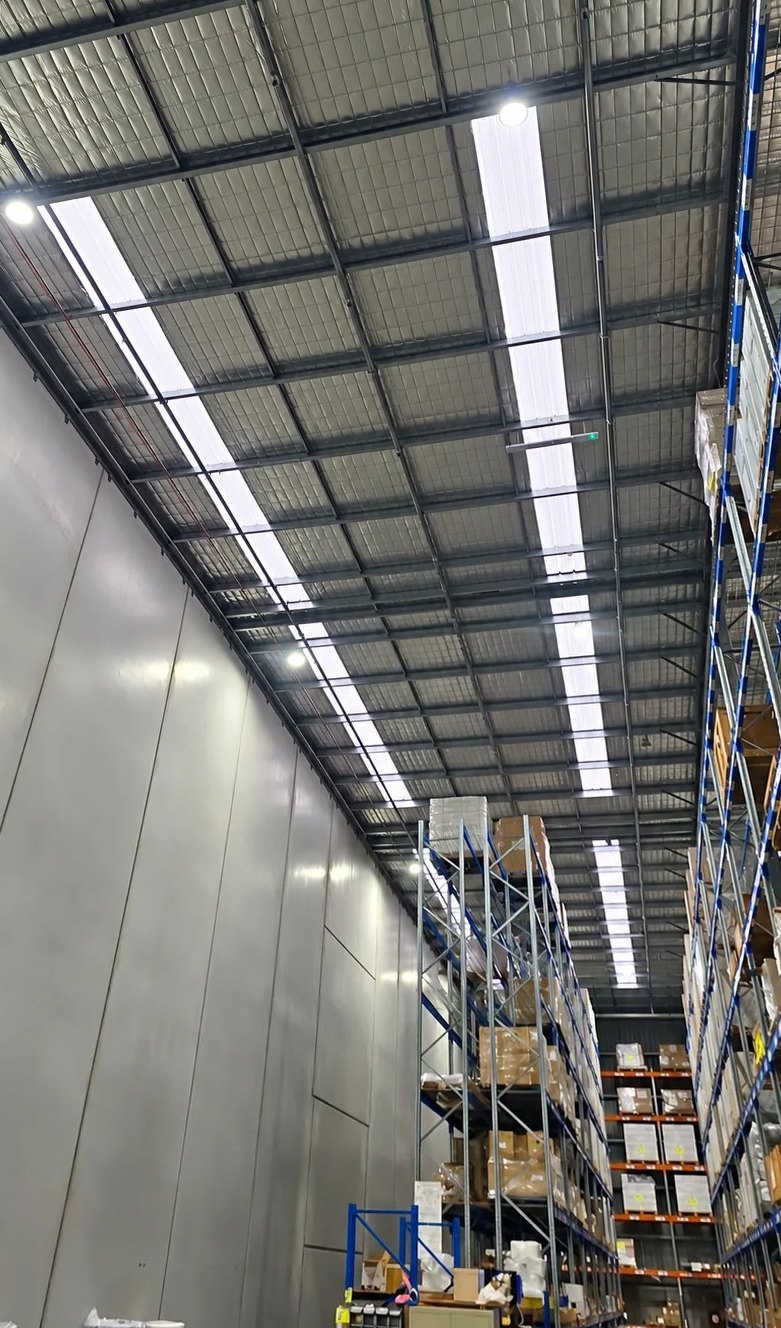
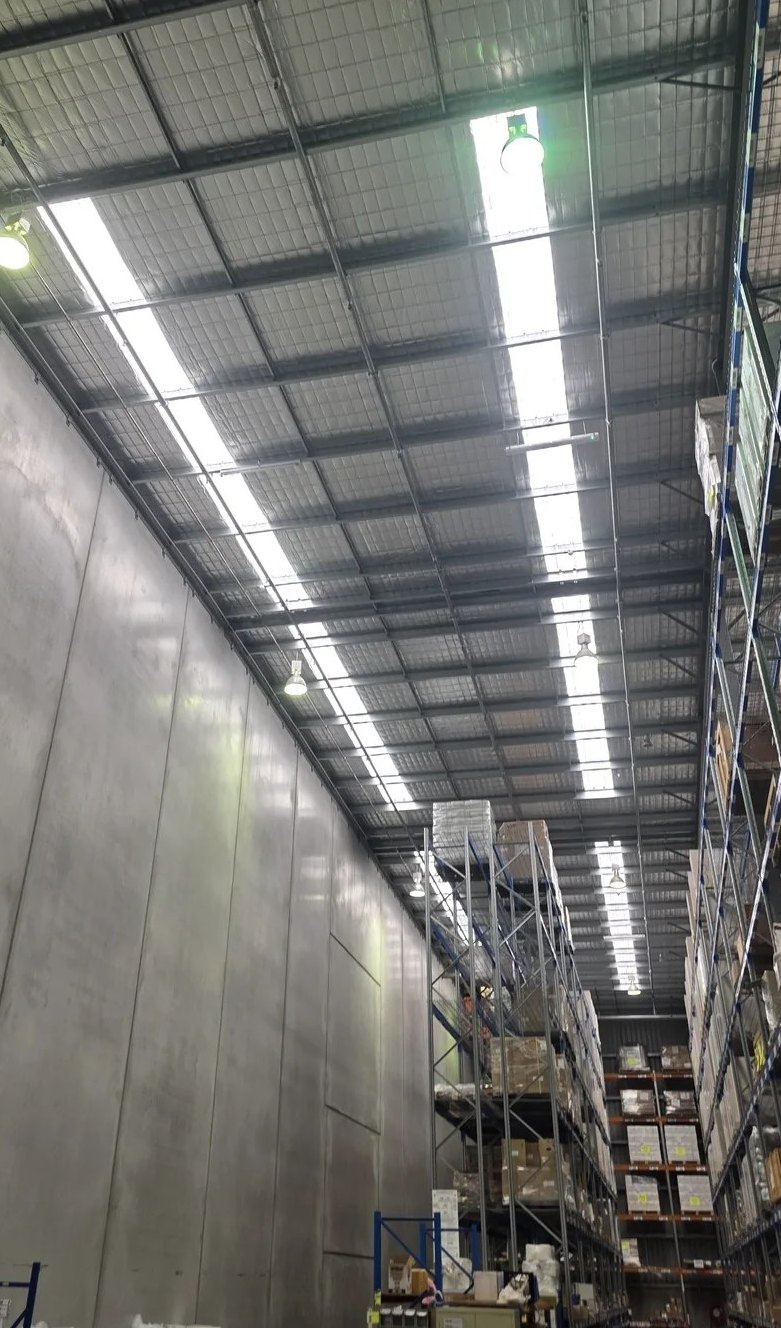
This warehouse in Adelaide’s western suburbs ran rows of old 400W high bays over its racking aisles. In July 2026 they were taken down and replaced with LED high bays by an accredited installer under REPS. The business paid the single $33 site co-payment.
Drag the slider to compare the same aisle before and after. The old lamps are the ones with the green tinge.
 BeforeAfter
The 8 lights over this one aisle now save about $2,370 a year. Each old 400W lamp drew about 450W with its control gear, and each LED draws about 70W. Estimated at 10 hours a day, 5 days a week and 30c per kWh.
Same aisle, same light positions. The photos were taken a day apart at different times of day, so daylight through the roof differs.
Buying LED high bay lights? Read this first
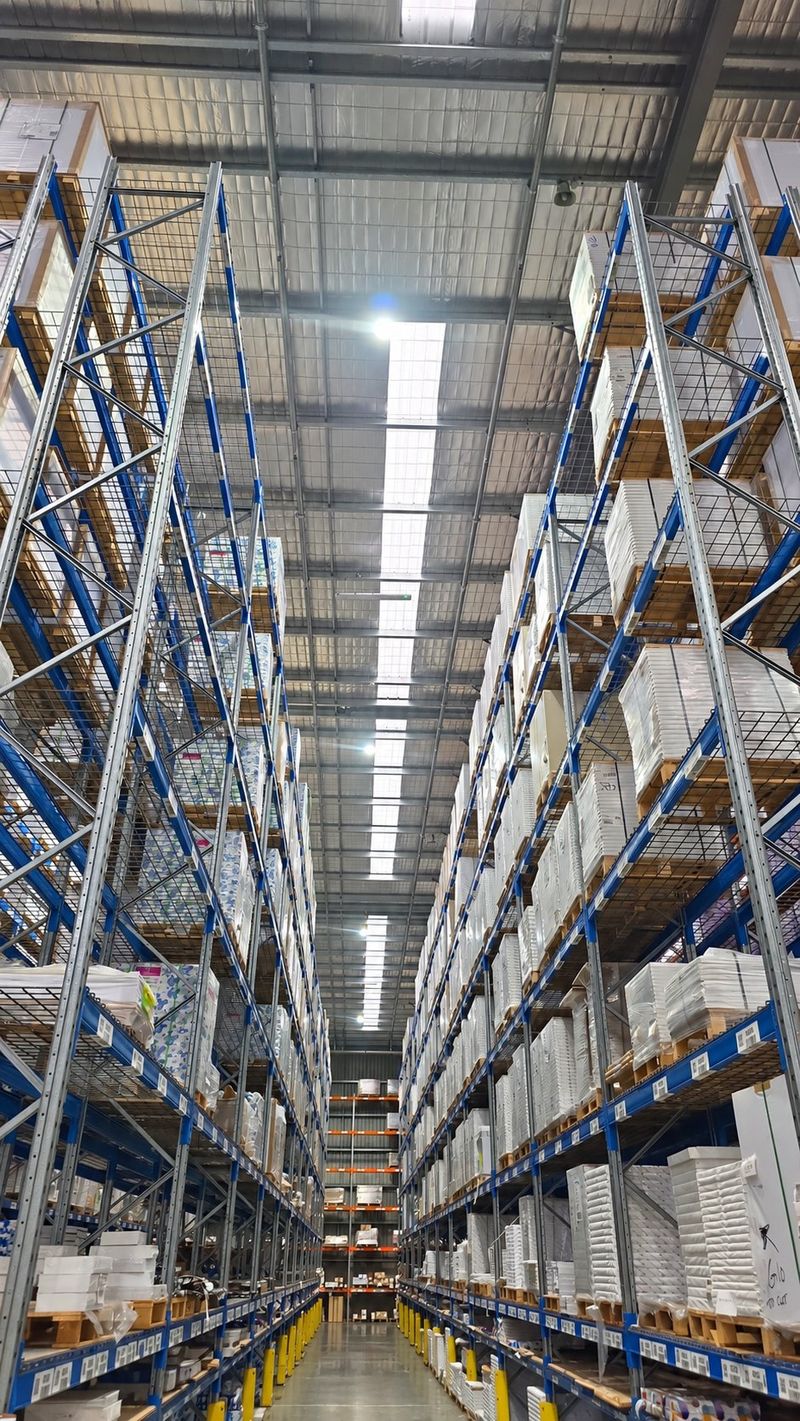
Most people searching for LED high bay lights are about to buy fittings and then pay an electrician to hang them. Bought that way, a warehouse upgrade commonly runs to a few hundred dollars a light once the fitting, the labour and the access equipment are added up.
In South Australia there is another way to do it. Under REPS, an eligible business can have its old 400W high bays taken down and new LED high bays supplied and installed by an accredited installer, with one $33 co-payment for the whole site. Whether you have 6 high bays or 60, the co-payment is the same. After it is paid, each light costs nothing on eligible sites.
Do not swap the old lights yourself first. The scheme requires the existing lights to be in place and working when the accredited installer arrives. If they have already been replaced, the incentive can no longer be applied to them.
Replacing 400W metal halide high bays with LED
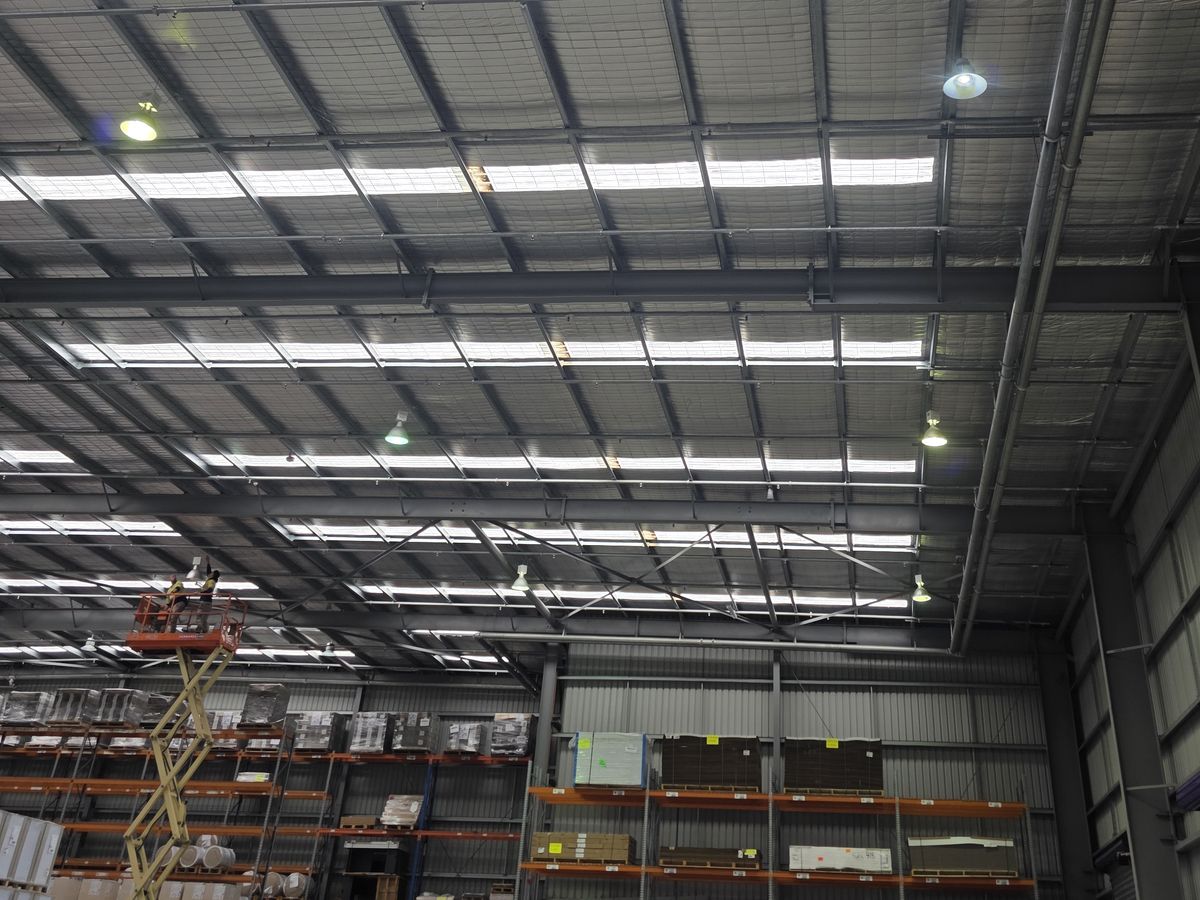
The classic warehouse high bay is a 400W metal halide or mercury vapour lamp in a round aluminium dome. With its control gear it draws about 450W, takes minutes to warm up and loses brightness as the lamp ages. The LED high bay fitted in its place draws about 70W, comes on instantly and is selected so the space meets the Australian lighting standard after the upgrade, which the scheme requires.
| 400W high bays on site | Estimated power saving a year | Co-payment on eligible sites |
|---|---|---|
| 10 | About $2,960 | $33 total |
| 20 | About $5,930 | $33 total |
| 40 | About $11,860 | $33 total |
Estimates assume 10 hours a day, 5 days a week, at 30c per kWh, with each high bay going from about 450W to 70W. The $33 applies to sites using under 160 MWh of electricity a year. Eligibility and your final cost are confirmed in a written quote from the accredited provider your job is placed with.
Old floodlights are covered too
Old 400W floodlights on walls, poles, yards and the outside of buildings are upgraded to LED the same way, and they sit under the same $33 site co-payment. Because floodlights usually run from dusk to dawn every night, each one saves more than a high bay on business hours, about $450 a year at 30c per kWh.
Warehouse lighting upgrades in Adelaide and SA
Most warehouse lighting in South Australia is still the industrial high bay that went in when the shed was built: 400W metal halide or mercury vapour lamps hung over the racking aisles, the loading dock and the dispatch floor. A warehouse lighting upgrade swaps each one for an LED high bay in the same position. You will also see these sold as UFO high bays, or written as one word, highbay.
Warehouse lighting installation under REPS is done by licensed electricians working for an accredited installer, usually from a scissor lift between the racks, and it can usually be planned around your shifts so picking and dispatch keep running. Factory lighting and workshop lighting are upgraded the same way.
It suits any South Australian business premises with high ceilings or outdoor work areas: warehouses, factories, workshops, cold stores, packing sheds, showrooms with high ceilings, depots and yards. Sites run from Wingfield, Regency Park, Port Adelaide, Beverley, Edinburgh and Lonsdale to Mount Barker, Murray Bridge, the Barossa and regional SA, subject to installer availability.
Industrial LED high bay lights: 100W, 150W or 200W?
If you are shopping for industrial LED high bay lights, you will see 100W, 150W and 200W fittings sold as the replacement for a 400W lamp. Wattage is only how much power a light uses. What lights the floor is lumens, and a modern LED high bay produces far more light for each watt than the ones sold a few years ago.
On scheme upgrades in South Australia, the LED high bay fitted in place of a 400W lamp draws about 70W. It is selected so the space meets the Australian lighting standard after the upgrade, which the scheme requires, and the installer confirms the light level for your mounting height before the job. So before you order a pallet of 150W fittings, check what the scheme would fit for $33.
LED shed lights for farm and business sheds
Searches for LED shed lights and shed lighting often come from someone with a tall machinery shed, packing shed or workshop lit by a few big 400W lamps. If the shed is part of a business or a working farm in South Australia, those lights can be replaced under the same scheme, with the same $33 site co-payment. Floodlights over the roller doors and the yard are included. This is for business premises. A shed or garage at home is not covered.
How the $33 works
REPS obliges South Australia’s energy retailers to fund energy saving upgrades every year, and commercial lighting is one of the activities that counts. High bays and floodlights save the most energy per fitting, so they earn the largest incentive. On eligible sites that incentive covers the new fittings and the installation.
The scheme also requires the business to make a minimum co-payment, and that is the $33. It is paid once for the whole site and it activates the incentive. It is not charged per light.
The $33 applies to sites using under 160 MWh of electricity a year, roughly a power bill under $4,000 a month. Sites above that pay a scheme minimum of $1.70 for each gigajoule of energy saved, worked out by the accredited installer and shown in the written quote.
Battens and ceiling panels on the same site
Fluorescent battens and ceiling panels earn a smaller incentive, so a small amount per fitting applies: indicatively $20 for each batten, $20 for each wide 1200 x 600 panel and $10 for each standard 1200 x 300 panel, plus GST. On a site that also has high bays or floodlights, those amounts are all you pay, because they already cover the $33 minimum. See the Adelaide LED lighting upgrade page for offices, shops and other sites without high bays.
Official sources: the ESCOSA REPS commercial lighting activity page and the CL1 activity specification.
Why a regular electrician can’t apply this rebate
The incentive is not a discount any electrician can pass on. Under REPS the upgrade has to be delivered by an accredited installer, using LED products approved for the scheme, with the paperwork signed before installation and the old and new fittings photographed as evidence. An electrician outside the scheme can fit LED high bays for you, but you pay full price for the fittings and the labour.
Energy Rebate Check is an independent service. We do not install anything. We take your site details and put you in contact with an accredited installer who covers your area, and nothing is installed without a written quote showing what you pay.
Tell us what lights you have
Use the tool to count your high bays, floodlights, battens and panels, or book a call if you are not sure what you have.
An accredited installer contacts you
They check the site, usually from a few photos first, and confirm eligibility and the cost in a written quote.
Licensed electricians do the upgrade
The old fittings come down and the new LED fittings go up. The installer handles the scheme paperwork.
FAQ
LED high bay upgrade questions
Bought and fitted privately, LED high bays commonly cost a few hundred dollars each once the fitting, an electrician and access equipment are added up. Under the Retailer Energy Productivity Scheme (REPS), an eligible SA business can have 400W high bays replaced by an accredited installer for one $33 co-payment for the whole site. Your written quote confirms the figure for your site.
Yes. The Retailer Energy Productivity Scheme (REPS) funds most of the cost of replacing old 400W high bays and floodlights with LED on eligible business premises. It is applied as a discount by an accredited installer, so the business pays a single $33 co-payment for the whole site. It is not a rebate you claim back afterwards.
Not quite. People often search for a free LED high bay replacement, but the scheme requires a minimum co-payment. For sites using under 160 MWh of electricity a year that is $33 for the whole site, however many high bays and floodlights are replaced. Larger energy users pay $1.70 for each gigajoule of energy saved.
Yes, on eligible sites. The $33 is the minimum co-payment REPS requires, and it is paid once per site, not per light. A site with 6 high bays and a site with 60 pay the same $33. It applies to sites using under 160 MWh of electricity a year, which covers most small and medium businesses.
Yes. Replacing 400W metal halide and mercury vapour high bays with LED high bays is covered by the REPS commercial lighting activity. Each old high bay draws about 450W with its control gear, and the LED fitted in its place draws about 70W.
Yes. Old 400W floodlights on walls, poles, yards and the outside of buildings are upgraded to LED the same way, and they sit under the same $33 site co-payment as the high bays.
No. A regular electrician cannot apply the REPS incentive. The upgrade has to be delivered by an accredited installer using approved LED products, with the scheme paperwork signed before the work starts. We put you in contact with an accredited installer who covers your area.
No. The scheme requires the existing lights to be in place and in working order when the accredited installer arrives. If the old lights have already been replaced, the site can no longer receive the incentive for them.
Sites using 160 MWh or more of electricity a year, roughly a power bill of $4,000 a month or more, are treated differently. In place of the $33, the scheme sets a minimum contribution of $1.70 for each gigajoule of energy saved. Your accredited installer works out the figure and it is shown in your written quote.
No. This page is for business premises such as warehouses, factories, workshops, packing sheds and farm sheds that are part of a business. A shed at home is not covered by the commercial lighting activity.
Yes. REPS is a statewide scheme, so sites in regional SA qualify the same way Adelaide sites do, subject to installer availability in your area.
UFO high bay is the common name for the round, flat LED high bay that replaces the old dome fitting. It hangs from the same point in the roof, comes on instantly and uses a fraction of the power of a 400W metal halide or mercury vapour lamp.